
How Nebraska Courts Handle Criminal Cases
Nebraska has a County Court and a District Court in every county. County Court hears misdemeanors, traffic cases, and local ordinance matters. It also receives felony complaints, holds the first appearance, sets bond, and conducts the preliminary hearing. If probable cause is found or that hearing is waived, the felony prosecution moves to Nebraska District Court. District Court has general trial power and enters the felony judgment and sentence.
Each Nebraska trial-court clerk keeps the official case file. JUSTICE provides a statewide access layer for Nebraska County and District Court records in all 93 counties, but it does not move custody of those files to a central office. Older Nebraska paper material, certified copies, and images that are not online still come from the filing court. Nebraska Court of Appeals and Supreme Court activity is searched through the appellate system rather than the trial-court index.
Three Nebraska Court Access Routes
Nebraska offers a paid one-time search, a subscription, and free public terminals. The best route in Nebraska depends on whether the need is one known case, repeated statewide research in Nebraska, or no-cost access. Current Nebraska prices changed on January 1, 2026, so older pages that still show lower figures should not control.
| Access route | Cost | Best use |
|---|---|---|
| One-time remote search | $17 | Up to 30 records with three calendar days of access |
| Subscriber account | $100 yearly; $2 per case detail | Repeated statewide searches for up to ten user names |
| Courthouse or law-library terminal | Free | Public trial-court searching without a remote fee |
The Judicial Branch fee announcement shows the new online structure.
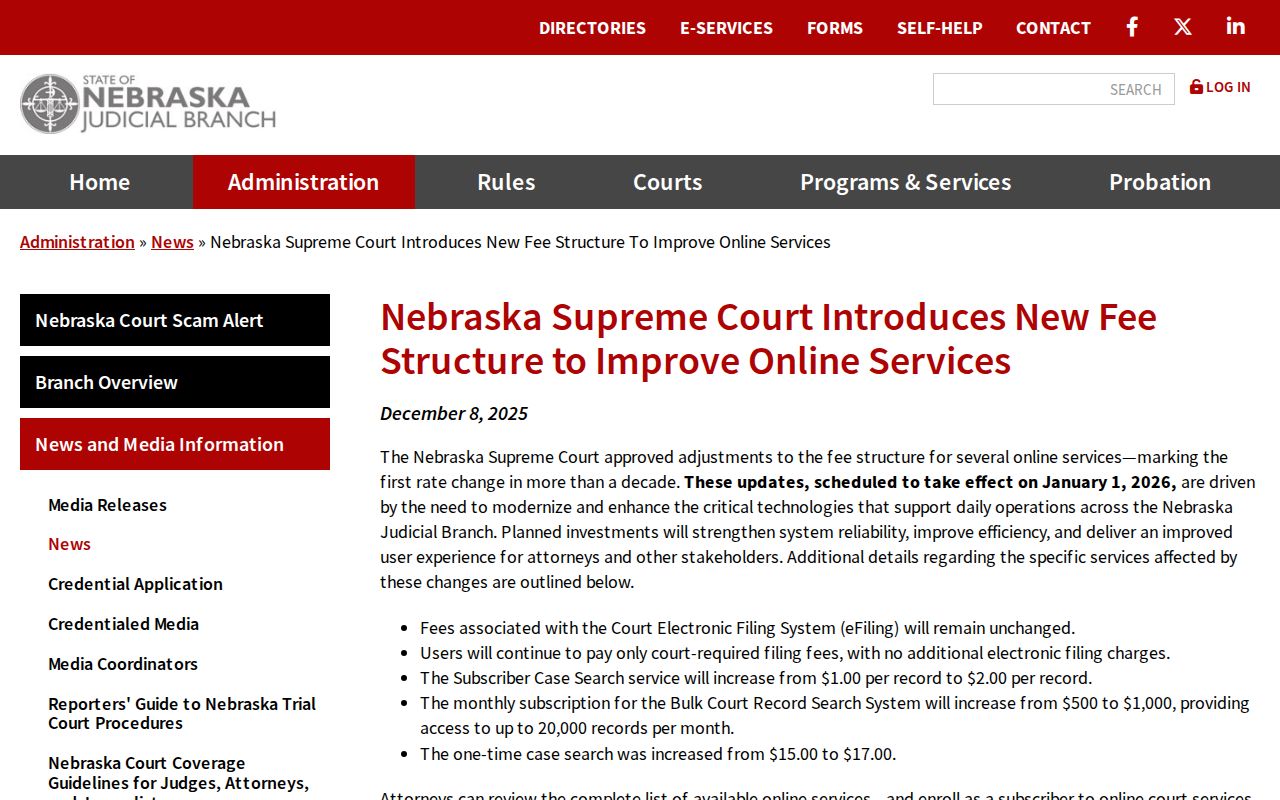
The official Nebraska notice distinguishes the current $17 and $2 amounts from stale $15 and $1 references. A Nebraska one-time fee is charged even when no case is found.
Running a Nebraska JUSTICE Search
JUSTICE can search every Nebraska County and District Court. Start with a broad name and add filters only as needed. A middle initial that does not match the filed caption can hide the correct result. New cases may take about 24 hours to appear, while sealed, juvenile, and other confidential matters stay outside public display.
- Open the JUSTICE one-time party-name search and accept its terms.
- Enter the surname first, then add a first name or birth date to narrow a common name.
- Select both County and District Court when the offense level or felony bind-over path is not known.
- Open the case detail and read the final judgment or disposition for each count, not just the complaint.
- Ask the filing clerk for an absent image, older file, or certified copy, using the exact case number.
| Field Label | Type | Required | Notes |
|---|---|---|---|
| Party Name | Text | One criterion | Individual format is Last, First, Middle, Suffix |
| Birth Date | Date | No | Useful to narrow a common name |
| County | Multi-select | No | Includes all 93 Nebraska counties |
| Court Type | Multi-select | No | County Court and District Court |
| Case Type and Subtype | Multi-select | No | Criminal, traffic, juvenile, civil, and probate options |
The official JUSTICE form shows how Nebraska separates party identity from court, county, year, and case-type filters.
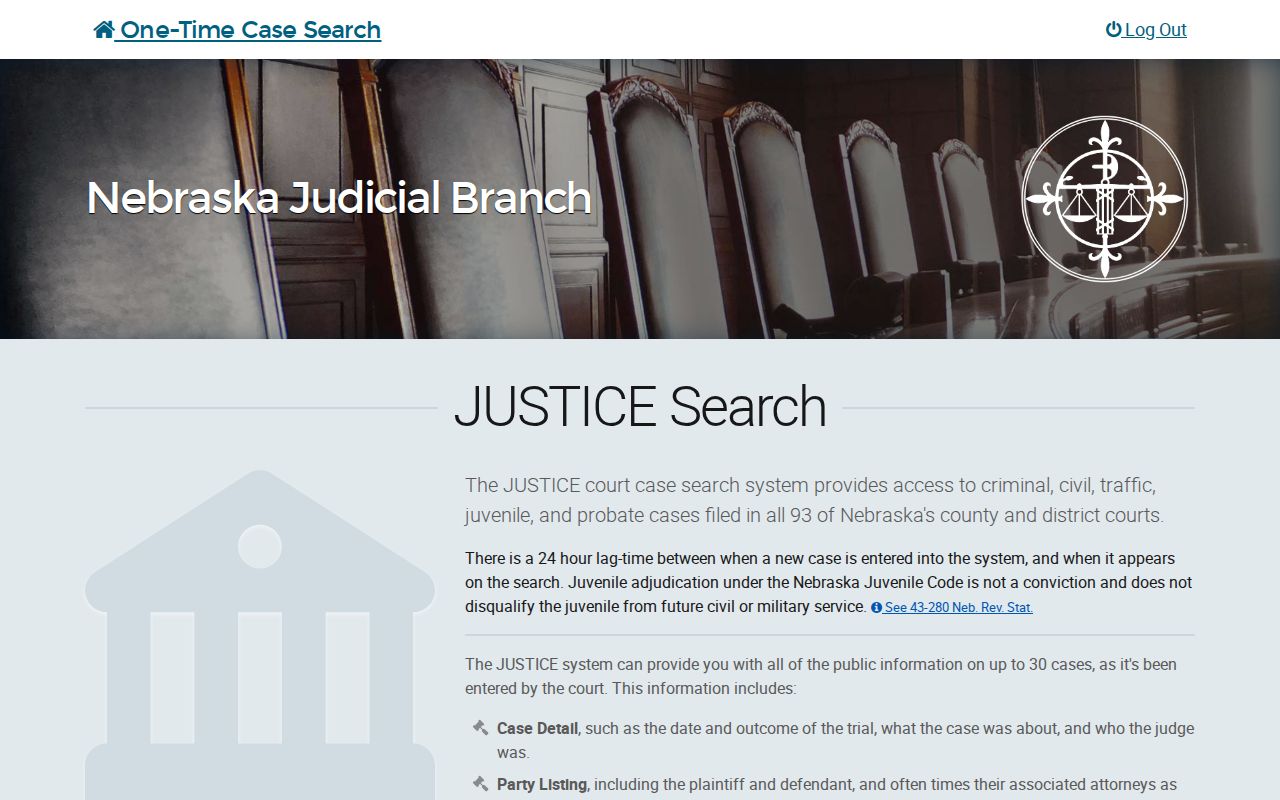
The Nebraska filter design makes a light first search more reliable than filling every Nebraska field at once.
Note: A paid Nebraska JUSTICE search is nonrefundable and can return no result, so use careful filters before submitting.
A Nebraska Felony's Two-Court Journey
A felony can produce two linked Nebraska trial-court files. Nebraska County Court handles the complaint, first appearance, bond, and preliminary stage. Nebraska District Court then receives the prosecution after bind-over, waiver, information, or indictment. Someone who searches only District Court may miss the early Nebraska custody and bond record. A County Court result alone may also stop before the final Nebraska felony judgment.
Nebraska has no separate public municipal-court network. City ordinance, traffic, and misdemeanor cases generally appear in County Court. A search for a city municipal docket should be reframed around the county and County Court. Appeals usually move from District Court to the Nebraska Court of Appeals, with further review or defined direct routes to the Nebraska Supreme Court.
Separate Juvenile Courts operate in three Nebraska counties, but confidentiality rules still control juvenile material. Specialty programs also exist across judicial districts, including adult drug, DUI, veterans treatment, and mental health courts. Availability is local. A qualifying program dismissal can change what the Nebraska State Patrol may release, so the later court outcome matters more than the program label alone.
Note: Search both trial-court levels before deciding that a Nebraska felony file is missing or incomplete.
What a Nebraska Case File Contains
A Nebraska case detail is organized around the filed accusation and the court's acts. Each count can end differently, so the case-level word "disposed" does not tell the full story. Match the final judgment to the specific charge and statute. Public images can add the signed order that explains a terse register entry.
| Case number and court | Identifies the county, court level, case type, year, and file. |
|---|---|
| Charging documents | Shows the complaint, information, or indictment and each filed offense. |
| Register of actions | Lists filings, hearings, pleas, warrants, orders, judgment, and appeal events. |
| Parties and counsel | Names the State of Nebraska, defendant as captioned, attorneys, and assigned judge where public. |
| Disposition | Records conviction, dismissal, acquittal, amendment, or another result for each count. |
| Sentence and financial data | May show jail, probation, NDCS term, restitution, costs, payments, and balances. |
The Nebraska case-information options describe the details and images available through each route.
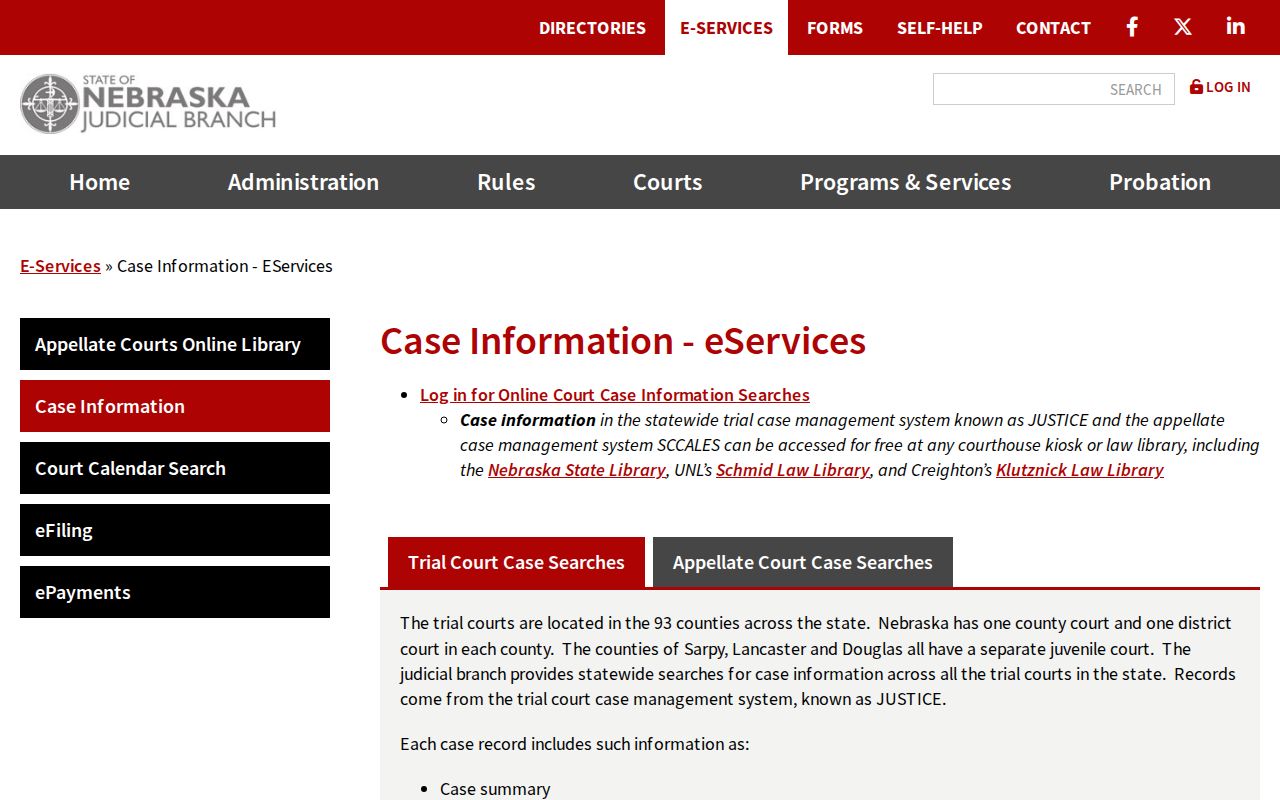
The Nebraska access page confirms that public terminal, one-time, and subscriber products reach the statewide Nebraska trial-court system under different terms.
Note: A Nebraska balance or intermediate docket event does not by itself establish current custody, guilt, or an active warrant.
Why Nebraska Court and NSP Records Differ
A JUSTICE file follows what the prosecutor filed and what the court decided. A Nebraska State Patrol record follows adult Nebraska arrest cycles supported by fingerprints and the dispositions reported to its Criminal Identification Division. These are related records, not duplicate products. A filed case can exist without a fingerprint-supported PCH entry. A PCH arrest label may differ from the charge that survived review.
Late reporting in Nebraska, a missing fingerprint card, an identity variant, or a source error can widen the gap. Only Nebraska felony arrest fingerprint submission is specifically required. A nonfingerprinted Nebraska misdemeanor event may never become a statewide rap-sheet cycle. When a discrepancy matters, obtain the signed Nebraska judgment and source record first. The source court or agency must validate and send a correction to CID.
Nebraska Criminal Case Stages
A Nebraska arrest or citation begins the referral, but the county attorney decides whether and what to file. The first court record can include an appearance, counsel, probable-cause review, and release conditions. An arraignment records the plea. Motions, discovery, status hearings, a negotiated plea, trial, diversion, dismissal, or a problem-solving program can then change the path.
After a Nebraska conviction, the judge enters a sentence that may include a fine, county jail, Nebraska probation, NDCS imprisonment, or post-release supervision as allowed by law. Later Nebraska violation or appeal entries can keep activity going after the first disposition date.
Case flow: Charges Filed › Arraignment › Pretrial › Plea or Trial › Disposition › Sentencing
Note: A Nebraska case marked disposed at one court level may still have later appellate or supervision activity.
Reading Nebraska Court Docket Terms
The Nebraska register of actions is a timeline, not a verdict list. A complaint is the first Nebraska charging instrument. An information is the prosecutor's formal Nebraska felony filing. Arraignment is the hearing where the charge is stated and a plea is entered. A capias or bench warrant is a Nebraska court order to take a person into custody, often after failure to appear or comply.
- Disposition
- The result of one charge, such as conviction, dismissal, or acquittal.
- Dismissed
- The charge ended without conviction; reason and timing still matter.
- Set aside
- Nebraska relief under section 29-2264 that changes legal effect but does not erase the visible conviction.
- Register of actions
- The dated list of filings, hearings, orders, and later case events.
Most qualifying Nebraska public images now include documents filed on or after April 16, 2008. Sealed Nebraska material and confidential material remain excluded. A financial balance on a Nebraska case does not prove an active warrant or current custody.
Nebraska case numbers preserve useful routing data, including a court indicator, a two-digit county code, a case type such as CR or TR, a two-digit year, and the file identifier. Keep all letters and leading zeros when contacting a clerk. One mistyped character can lead to the wrong court level or no match.
When a Nebraska Case Is Missing Online
First remove extra filters and search name variants. Check County and District Court, allow for the roughly 24-hour new-case lag, and verify that the event occurred in Nebraska rather than federal or tribal court. Protected juvenile cases, sealed records, and confidential material will not become public merely because JUSTICE is statewide.
The Nebraska court records search policy explains free terminals and the clerk fallback.
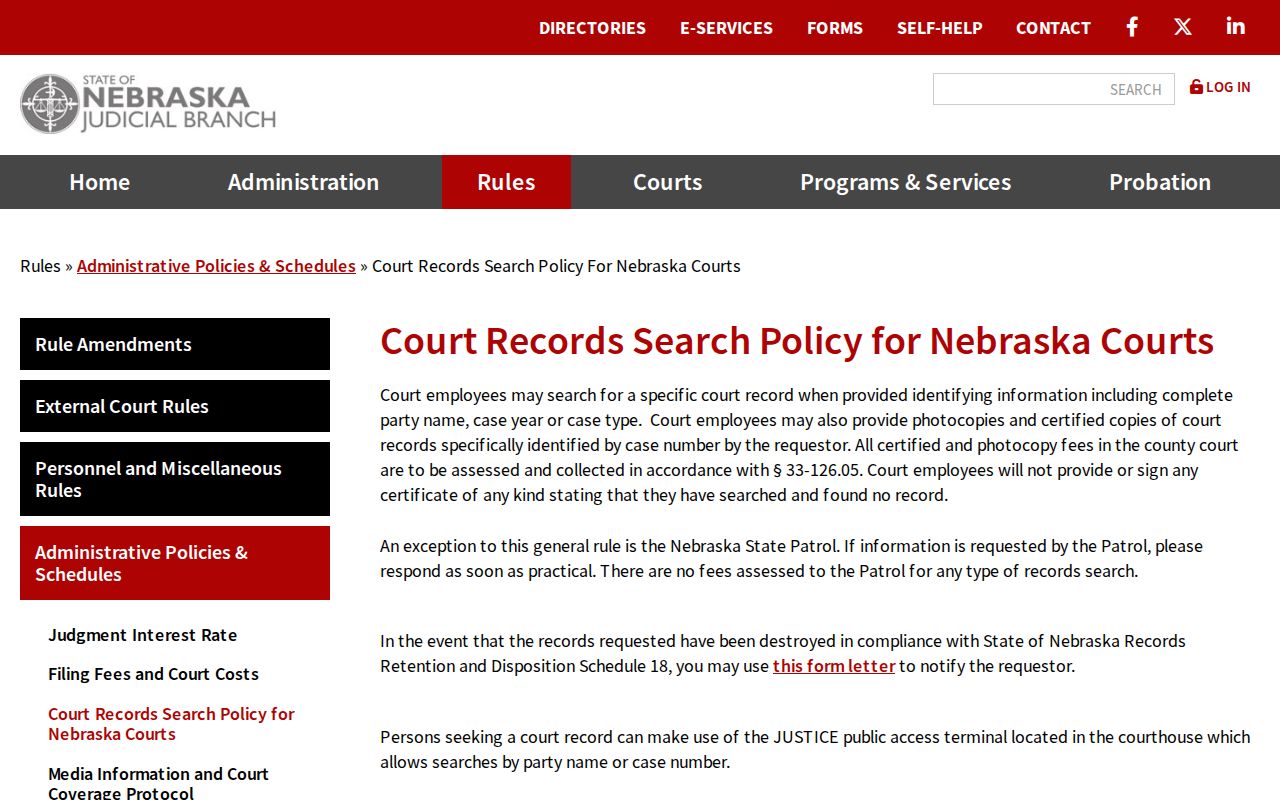
The Nebraska policy limits clerk searches to specifically identifiable records. A Nebraska clerk can certify a located copy, but court staff do not issue a general certificate that no Nebraska record exists.
Note: No online Nebraska result can reflect archive limits, spelling, timing, or confidentiality instead of the absence of a case.
County Sources for Nebraska Case Records
The clerk in the filing county is the source for a certified judgment, an older paper record, and a public image not in JUSTICE. Preserve the full Nebraska case number, including letters and leading zeros. County Court copies are listed at $0.25 per page plus $1 for a certificate or seal. District Court and archive charges may differ. The Judicial Branch court-cost page is the official place to check current statewide schedules.
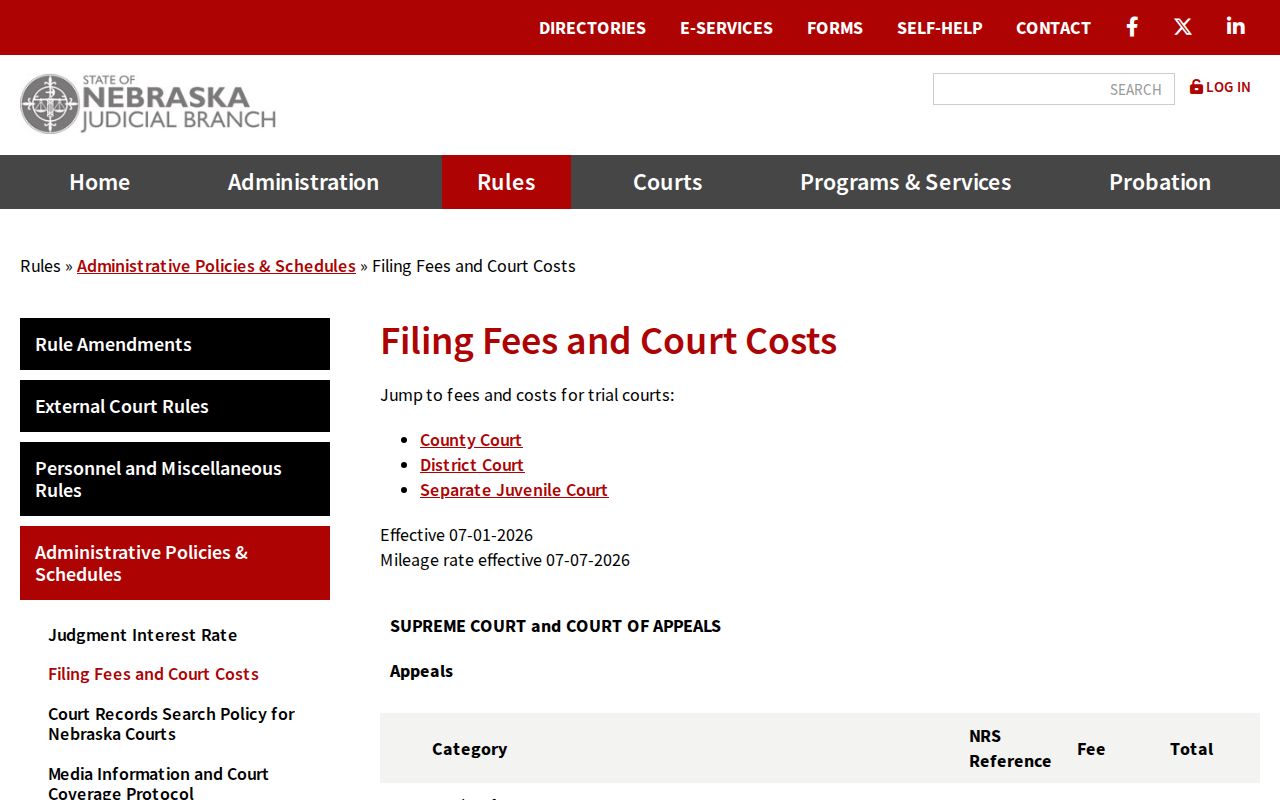
The schedule is a starting point, while the filing clerk confirms the exact copy, certification, or archive cost. Browse the directory of all 93 Nebraska counties to reach the right local records route. Federal criminal cases are separate from JUSTICE. The U.S. District Court for the District of Nebraska shows its official federal services.
Federal dockets use PACER instead of the Nebraska trial-court case system, so each search answers a different jurisdictional question.